Acceptance raises Alabama liability to $1 million. It does not raise uninsured coverage to that figure.
Start with the app-status table, the fault rule, and the records to request. Certificate detail comes after those three.
The switch at acceptance is a liability switch only. Ala. Code § 32-7C-2 sets the liability floors in the table. It does not set a $1,000,000 uninsured-motorist figure.
As of October 3, 2026, the history line for § 32-7C-2 lists Act 2016-409 only. No later amendment appears on that line.
Logged on, the floor is 50/100/25. Acceptance replaces it with one $1 million figure.
| Where the driver is | Liability § 32-7C-2 requires | What acceptance does not raise |
|---|---|---|
| Logged on and available, request not yet accepted | Primary automobile liability of at least $50,000 / $100,000 / $25,000, plus all other state mandated coverage, including Chapter 7. § 32-7C-2(b)(1). | No separate company uninsured-motorist dollar. The uninsured-motorist statute stays at $25,000 / $50,000 bodily injury unless the named insured rejects it. It does not rise because the driver is logged on. |
| Request accepted, through the drive to the pickup, until the last requesting rider departs | Primary automobile liability that provides at least $1,000,000 for death, bodily injury, and property damage, plus the same other-coverage clause. § 32-7C-2(c)(1). The statute does not label that figure a combined single limit, and it does not break it into per-person, per-accident, and property-damage parts. | Acceptance does not create a $1,000,000 uninsured-motorist figure. There is no second step-up when the rider gets in the car. Section 32-7C-2(i) keeps the rider’s own § 32-7-23 recovery as additional coverage. That is not a company uninsured-motorist mandate of $1,000,000. |
| Last requesting rider has departed; driver still logged on; no new acceptance | The prearranged ride has ended. If the driver is still logged on and available, the text that fits is again 50/100/25, plus other state mandated coverage. | No statutory uninsured-motorist tail after departure. |
The waiting-period property-damage figure is $25,000. That is the same property-damage dollar as the ordinary financial-responsibility floor. What rises while the driver is only logged on is the bodily-injury pair, from 25/50 to 50/100. What rises at acceptance is one figure for death, bodily injury, and property damage together. The $1,000,000 sentence is not an uninsured-motorist sentence, and it is not 50/100/25 plus a separate layer on top.
Logged off, and not in a prearranged ride, Chapter 7C does not set the limit. Ordinary mandatory liability insurance still points at § 32-7-6(c): at least $25,000 because of bodily injury or death of one person, $50,000 because of bodily injury or death of two or more, and $25,000 because of injury to or destruction of property. § 32-7A-4. The history of § 32-7A-4 includes Act 2025-345. The current text still points at § 32-7-6(c). It does not replace those dollars. The history of § 32-7-6 ends at Act 2008-393. The same 25/50/25 figures are the definition of proof of financial responsibility in § 32-7-2(10). Those are not the logged-on floors, except that the waiting-period property-damage number happens to match the ordinary $25,000.
Insurance that satisfies Chapter 7C satisfies the financial-responsibility requirement for a motor vehicle under Chapter 7. A driver who is not logged on, and not in a prearranged ride, is not relieved of Chapter 7. § 32-7C-2(g). Each logged-on period may be satisfied by insurance maintained by the driver, by the transportation network company, or by any combination. The policy has to be primary automobile insurance that recognizes that the driver is a transportation network company driver, or otherwise uses a vehicle to transport riders for compensation, and it has to cover both logged-on use and prearranged-ride use. The maintenance sentence says that duty runs on or before October 30, 2016, and thereafter. § 32-7C-2(a), (b)(2), (c)(2).
The chapter does not divide the waiting-period limit among every app a driver is logged into before a match. The required policy may be placed with an insurer licensed under state law, or with a surplus lines insurer eligible under state law that has a credit rating of no less than A- from A.M. Best or A from Demotech, or a similar rating from another rating agency recognized by the Department of Insurance. § 32-7C-2(f). Chapter 7A has its own sentence about who may issue a policy for a vehicle subject to registration. The transportation-network section has its own surplus-lines sentence. The two are not one admitted-carrier-only rule.
Any contributory negligence is a complete bar
Alabama has not replaced contributory negligence with comparative negligence. In Williams v. Delta International Machinery Corp., 619 So. 2d 1330 (Ala. 1993), the Alabama Supreme Court, after briefing on whether to abandon the doctrine, decided that it should not abandon contributory negligence, which had been the law for approximately 162 years. The trial court had refused a comparative-negligence charge and had said it would charge plain Alabama contributory negligence as a complete defense. The Supreme Court affirmed.
Any contributory negligence chargeable to the claimant is a complete defense. Williams is a products case. It is the Supreme Court’s refusal to change the general rule. It is not a transportation-network opinion.
The insurance exchange is 12 hours of log-on and log-off times. Trip records are kept two years.
In a claims coverage investigation, the company, on request of a directly involved party, any insurer of the driver, or a lienholder of the driver, shall provide the precise times the driver logged on and off the digital network in the 12-hour period immediately before the accident and in the 12-hour period immediately after it. § 32-7C-4(i). The record is those log-on and log-off times. The section does not widen that duty into twelve hours of location traces, the full policy, or a coverage-and-exclusions summary.
Separate from that 12-hour exchange:
- The driver carries proof of the Chapter 7C coverage during use of a vehicle in connection with the digital network. § 32-7C-2(h)(1).
- In an accident, the driver provides that insurance information to the directly interested parties, automobile insurers, and investigating police officers. § 32-7C-2(h)(2).
- On request, the driver discloses whether he or she was logged on, or on a prearranged ride, at the time of the accident. § 32-7C-2(h)(3).
- An insurer potentially providing coverage discloses, on request by any other insurer involved in the claim, the applicable coverages, exclusions, and limits maintained to satisfy the chapter. § 32-7C-4(j).
- Individual trip records are kept at least two years from the date each trip was provided. Individual driver records are kept at least two years from the date the driver’s relationship with the company ended. § 32-7C-33(a). Those are operating records. They are not the 12-hour insurance exchange, and they are not a limitations period.
- Within a reasonable period after the trip, the company transmits an electronic receipt with origin and destination, total time and distance, total fare paid, and the driver’s first name. § 32-7C-27. A reasonable period is the statutory phrase. It is not a fixed number of hours.
The facts that match these clocks are whether the driver had accepted a request, even if the rider was not yet in the car; the time the last requesting rider departed the vehicle; the 12-hour log-on and log-off record; the receipt’s origin, destination, time, and distance; the personal policy, any rideshare endorsement or exclusion, and any written uninsured-motorist rejection; and the certificate together with the policy or endorsements in force on the accident date. Lyft’s form does not assign its three policy numbers to the statutory periods. Uber’s form does describe waiting versus accepted, in the words above. If the company’s insurer pays a covered comprehensive or collision claim and a lender has a secured interest, the payment is issued either to the repair shop or jointly to the owner and the lender. § 32-7C-4(l).
Alabama & the South
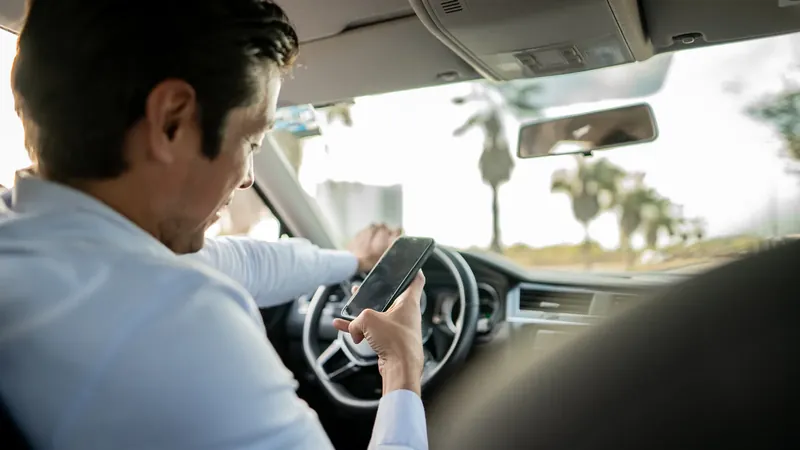
The $1 million period ends when the last requesting rider departs the vehicle
Section 32-7C-1(3) defines a prearranged ride as transportation by a transportation network company driver to a rider, beginning when the driver accepts a ride requested through a digital network controlled by the company, continuing while the driver transports the requesting rider, and ending when the last requesting rider departs from the driver’s personal vehicle.
Acceptance is the switch. The $1,000,000 liability period is already running while the driver is only driving to the pickup. The rider does not have to be in the car. The statute does not print a third liability number for the time the passenger is seated.
The period stops when the last requesting rider departs the vehicle. It does not stop when the app marks the trip complete, and it does not stop when unloading finishes. There is no later-of-two-events test in this definition. After that departure, if the driver is still logged on and available and has not accepted another ride, the waiting-period text is the one that fits: at least 50/100/25, plus other state mandated coverage.
A prearranged ride does not include a shared-expense carpool or vanpool, or transportation by a regional transportation company or a licensed motor carrier under the Alabama Motor Carrier Act. The history line on § 32-7C-1, like the history line on § 32-7C-2, ends at Act 2016-409.
Uninsured coverage stays the smaller, rejectable bodily-injury rule, and the rider’s own policy is additional
Liability coverage answers for the rideshare driver’s legal responsibility. Uninsured-motorist coverage is a different statute, and it does not move when the liability figure moves.
Section 32-7-23 is the uninsured-motorist statute, and it is also the underinsured case. Its history line is Acts 1965, No. 866, and Acts 1984, No. 84-301. No later act is on that line. An automobile liability policy delivered or issued for delivery in this state, for a motor vehicle registered or principally garaged in this state, has to include uninsured-motorist coverage at the bodily-injury limits in § 32-7-6(c), unless the named insured rejects it. Those limits are $25,000 / $50,000 for bodily injury or death. The uninsured-motorist statute does not require uninsured-motorist property damage. The 25/50 pair is not a property-damage benefit, and it does not become $1,000,000 because prearranged-ride liability is $1,000,000.
If the named insured rejected the coverage, a renewal from the same insurer need not include it unless the named insured requests it in writing.
An uninsured motor vehicle includes, and is not limited to, a vehicle in any of these situations: neither the owner nor the operator carries bodily-injury liability insurance; any applicable bodily-injury liability limits are below the minimum in § 32-7-6; the insurer becomes insolvent after the policy is issued so that no insurance applies to the accident; or the sum of the limits of liability under all bodily-injury liability bonds and insurance policies available to an injured person after an accident is less than the damages that person is legally entitled to recover. § 32-7-23(b). The last of those is the underinsured case. It compares the sum of available bodily-injury limits with the damages. It is not a test that simply asks whether their limits sit below the injured person’s own limits. The below-minimum clause is a separate test. The two are not the same rule.
Inside any one contract, recovery under the uninsured provisions is limited to the primary coverage plus additional coverage for additional vehicles, not to exceed two additional coverages within that contract. § 32-7-23(c). That is a cap of three uninsured-motorist coverages inside one contract. It is not a rule that coverage on two different insurers’ policies can never be stacked, and it is not a rule that it always stacks. The statute does not state a universal setoff formula.
Section 32-7C-2 does two different things with this statute, and neither one is $1,000,000 of uninsured-motorist coverage.
- In both the waiting period and the prearranged ride, the required policy includes all other state mandated coverage for motor vehicles, including the requirements under Chapter 7. Chapter 7 includes § 32-7-23. What § 32-7-23 requires is 25/50 bodily-injury coverage unless the named insured rejects it, and only for a policy the delivery sentence actually covers.
- The chapter has no effect or limitation on the rights of a transportation network company rider to coverage that may be available for underinsured or uninsured motorist coverages under § 32-7-23, as an additional recovery beyond any insurance coverage available to that rider under the chapter. § 32-7C-2(i).
Subsection (i) is about the rider’s own rights. It calls that recovery additional, and beyond coverage available to the rider under the chapter. It does not say the company policy must carry uninsured-motorist coverage equal to the liability limit. It does not say the rider’s own coverage is primary. It does not say a rejection on the company policy waives the rider’s own policy.
A personal policy may exclude uninsured and underinsured motorist coverage for a loss while the driver is logged on or providing a prearranged ride. § 32-7C-4(b)(3). If that policy uses the exclusion, the exclusion removes that personal coverage. The certificates do not decide whether a particular personal policy has the exclusion.
Uber’s current certificate says uninsured and underinsured motorist coverage is not included in any amount, both while the driver is available and after acceptance. Lyft’s current certificate does not mention uninsured-motorist coverage, underinsured-motorist coverage, personal injury protection, or medical payments. Whether those certificate silences satisfy or violate the incorporation of section 32-7-23 is unsettled. The certificates are not the policies.
Company coverage starts at the first dollar and cannot wait for a personal denial
If insurance maintained by the driver under subsection (b) or (c) has lapsed, or does not provide the required coverage, insurance maintained by the transportation network company shall provide the coverage required by this chapter beginning with the first dollar of a claim, and shall have the duty to defend the claim. § 32-7C-2(d).
Coverage under an automobile insurance policy maintained by the company may not be made dependent on a personal automobile insurer first denying a claim, and a personal automobile insurance policy may not be required to first deny a claim. § 32-7C-2(e).
The trigger is a lapse, or a policy that does not provide the required coverage. It is not limited to a policy that is missing entirely. The coverage required by the chapter is the chapter’s requirement. Subsection (d) does not promise every extra limit a certificate happens to show above the statutory floor, and it does not fill a certificate line that omits a liability dollar. The section does not say that, if the driver has some coverage below the statutory limit, the company policy is excess for the difference.
Section 32-7C-4(a) lets insurers that write automobile insurance in this state exclude any and all coverage for a loss while a driver is logged on to a company’s digital network, or while a driver provides a prearranged ride. The right to exclude may apply to any coverage in the policy, including liability, personal injury protection coverage as defined by state law, uninsured and underinsured motorist coverage, medical payments coverage, comprehensive, and collision. § 32-7C-4(b). The words "as defined by state law" do not create a personal-injury-protection benefit.
Those exclusions apply notwithstanding any requirement under Chapter 7. Nothing in the section implies or requires that a personal policy provide coverage while the driver is logged on, engaged in a prearranged ride, or otherwise using a vehicle to transport passengers for compensation. The insurer does not have to use any particular policy language, or cite this section, to exclude that use. An insurer may still provide primary or excessive coverage for the driver’s personal vehicle by contract or endorsement. The statute’s word is excessive, not excess. § 32-7C-4(c) through (f).
An automobile insurer that excludes the coverage described in the chapter has no duty to defend or indemnify a claim the policy expressly excludes. The chapter does not invalidate an exclusion in a policy in use or approved for use in this state before August 1, 2016, that excludes coverage for vehicles used to carry persons or property for a charge or available for hire by the public. That grandfather preserves older exclusions. It does not create coverage. § 32-7C-4(g). If a personal insurer defends or indemnifies a claim against a driver that its policy excludes, it has a right of contribution against other insurers that provide automobile insurance to the same driver in satisfaction of the chapter’s coverage requirements at the time of loss. § 32-7C-4(h).
Logged-off personal use sits outside Chapter 7C. The chapter does not contain a sentence that an insurer may not deny a purely personal-use claim solely because the insured also drives for a transportation network company. Whether a particular policy’s for-hire exclusion reaches a trip taken with the app off is a question about that policy. The August 1, 2016 grandfather does not say those older exclusions reach a trip taken with the app off.
Alabama is not a no-fault state. Nothing read in Chapter 7C, Chapter 7, or Chapter 7A requires personal injury protection or medical payments, abolishes tort liability, or sets a tort threshold. Neither the current Uber certificate nor the current Lyft certificate lists a personal-injury-protection amount or a medical-payments amount.
Before the driver may accept a request, the company must disclose in writing the insurance coverage, including the types and limits, that it provides while the driver uses a personal vehicle in connection with the digital network, and that the driver’s own automobile policy may not provide any coverage while the driver is logged on and available or engaged in a prearranged ride, depending on its terms. § 32-7C-3. No contract between the company and a driver or rider may diminish the automobile insurance requirements of the chapter. § 32-7C-2(j).
The Department of Insurance’s May 17, 2016 notice states that Act 2016-409 is effective August 1, 2016. The maintenance sentence in § 32-7C-2(a) uses October 30, 2016. For an accident now, both dates are long past. A personal-auto form from before August 1, 2016 should not be read as if the chapter had already forced this coverage into it. Article 2, effective July 1, 2018, did not rewrite the insurance dollars in § 32-7C-2. A driver or the company maintains automobile insurance pursuant to Article 1. § 32-7C-28.
Uber describes the two periods. Lyft prints three policy numbers and leaves one liability line blank.
A certificate is evidence of insurance, not the policy. The two current forms do not match each other. Neither one is a $1,000,000 uninsured-motorist policy. Limits below are what the cited certificate prints.
Uber: United Financial Casualty Company, and a September 1 certificate date
The file is the one linked from the Alabama entry on Uber’s certificates list as of October 3, 2026. Insurer A is United Financial Casualty Company, NAIC 11770. The producer is Progressive. The certificate face does not print the word Alabama. The state identification is Uber’s own index. The $25,000 property-damage limit and the $1,000,000 combined single limit track § 32-7C-2. Uber certificate linked from that Alabama entry.
While the driver is logged on and available, and has not accepted a request, the certificate date is March 1, 2026. Policy 06250463 runs March 1, 2026 through March 1, 2027. The printed limits are $50,000 bodily injury per person / $100,000 bodily injury per accident / $25,000 property damage per accident. The description says uninsured and underinsured motorist coverage is not included in any amount. That page has no personal injury protection, no medical payments, and no combined single limit.
After acceptance, the certificate date printed on that page is September 1, 2026. Policy 06250454 still shows the policy period March 1, 2026 through March 1, 2027. September 1 is the certificate date. It is not a new inception, and it is not a new policy period. The covered-auto description is a driver who is logged on, has recorded acceptance, and is either traveling to the pick-up location or traveling from the pick-up location to the final destination location. The printed liability limit is a $1,000,000 combined single limit. The per-person, per-accident, and property-damage cells on that row are blank. Uninsured and underinsured motorist coverage is not included in any amount. That sentence covers the accepted-trip use described in the same paragraph, including the drive to the pickup. The page lists no personal injury protection, no medical payments, and no airport limit.
The statute still treats the accident as a prearranged ride after the car has arrived and before the last requesting rider departs. Whether Uber’s wording, traveling to the final destination location, covers that moment is unsettled. The certificate does not use the statute’s ending words.
Comprehensive and collision on policy 06250454 are actual cash value with a $2,500 deductible for each. The remarks do not say this physical-damage coverage is contingent on the driver carrying personal collision, or personal comprehensive. They do not apply those deductibles to the waiting-period policy. Policy 06250463 is not on that schedule. Uber’s general insurance page, which is a different document, says repair coverage once a ride is accepted is contingent on the driver’s personal policy including comprehensive and collision. That marketing page is not the certificate. The certificate prints the $2,500 deductibles and does not print that contingency. The two documents should not be merged into one condition.
Lyft: State Farm, three policy numbers, and no period labels
Lyft’s current certificate is dated October 1, 2026. The policies run October 1, 2026 through October 1, 2027. Insurer A is State Farm Fire and Casualty Company, NAIC 25143. Insurers B through F are blank. The description of operations says "Evidence of insurance for the state of AL." The form does not label a waiting period, a drive to the pickup, or a passenger trip. Lyft certificate for that policy year.
- Policy 5329084-D01-01 prints a $1,000,000 combined single limit. The bodily-injury per person, bodily-injury per accident, and property-damage cells on that row are blank. The suffix is D01, not 001.
- Policy 5329081-D01-01, on the non-owned autos row, prints $50,000 bodily injury per person / $100,000 bodily injury per accident / $25,000 property damage.
- Policy 5329085-D01-01 is listed for the same dates and prints no liability dollar. No combined single limit and no split limit appear on that row. The only $1,000,000 on the page sits on the 5329084 row.
Policy 5329085-D01-01’s liability limit is unsettled. Last year’s form, certificate date October 1, 2025, also omitted a liability dollar on 5329085. That earlier form is not the current limit, and it is not a reason to fill the blank. Prior Lyft certificate.
Which of Lyft’s three policy numbers matches logged-on availability, the drive to the pickup, or the passenger trip is unsettled. The certificate does not say. A numerical resemblance to the statutory floors is not a period label.
The remarks put a $2,500 comprehensive deductible and a $2,500 collision deductible on policies 5329084 and 5329085 only. The physical-damage limit is actual cash value or the cost to repair, whichever is less, less that deductible. Policy 5329081 is not named in those remarks. The remarks do not say physical damage is contingent on the driver carrying personal comprehensive and collision. The certificate does not mention uninsured-motorist coverage, personal injury protection, or medical payments, and it does not print an airport liability increase.
Birmingham’s code still prints $500,000. That printed figure is not the trip limit.
Section 32-7C-36 says transportation network companies, drivers, and vehicles are governed exclusively by state law, including Article 1 of the chapter, which governs insurance requirements. A county, municipality, airport authority, or other local government may not impose an operation requirement on a company, driver, or vehicle if it relates to providing prearranged rides. A city may, by ordinance, prohibit prearranged rides that originate inside its limits. It may not specify additional or alternative requirements as a condition of operating. An airport may charge reasonable pickup fees and designate staging and pickup locations. None of those exceptions authorizes a different auto-liability dollar. Article 2, which contains this preemption section, is effective July 1, 2018. It did not amend the dollars in § 32-7C-2.
Birmingham Code § 12-16-5, read on Municode on October 3, 2026, still prints a $500,000 single-limit minimum for services offered by third party transportation app services, with the city named as an additional insured. The history note on that section ends at Ordinance No. 14-111, August 8, 2014. The published section does not say that $500,000 figure is waived, and it does not point the reader to § 32-7C-2. The published history does not show a repeal.
That $500,000 figure is not the trip limit under Chapter 7C. The state liability tiers are the amounts in § 32-7C-2. Whether Birmingham still applies the printed $500,000 figure to these trips is unsettled.
Check with an Alabama attorney or the Montgomery code before relying on a Montgomery auto-liability dollar different from Chapter 7C. A Birmingham airport driver-standards excerpt, a PDF created January 23, 2025, states geofence, staging, and conduct rules and a trip fee. It contains no auto-liability dollar. Birmingham airport driver-standards excerpt.
Latest from Alabama
The $1 million question is whether the driver had already accepted, and whether the last rider had already gotten out
Liability can sit at $1 million while uninsured coverage does not. The next documents are the acceptance time, the departure time, and the certificate that was actually in force, including the liability line it leaves blank.