Uber Blames Injury Lawyers for Expensive Rides. What Do the Numbers Show?
Imagine your Uber is stopped at a red light when another driver hits it from behind. You could be badly hurt even though your Uber driver did everything right. Uber uses a scenario like this in its U.S. Safety Report. It’s also a reason an injured passenger may have a legitimate insurance claim after an accident the Uber driver didn’t cause.
Uber says high coverage limits attract lawsuits and that fraudulent claims and excessive settlements raise the price riders pay. Its annual report confirms insurance costs rose. The harder question is how much of a fare increase comes from lawsuits, and how much comes from other insurance costs, service fees, demand, driver pay, or decisions the platforms make about pricing.
Inside the 2021–2022 U.S. Safety Report, published August 30, 2024, Uber reviewed 97 fatal motor-vehicle accidents reported for 2017 and 2018. Uber said the driver’s actions likely led to 18% of them, that more than one party, including the Uber driver, may have contributed to 25%, and that the Uber driver appears not to have contributed to 58%. Those percentages are Uber’s own reading of the facts then available. They are not court findings.
How the injury lawyer became the explanation for your fare
In February 2025, Bloomberg reported that Uber was launching a seven-figure ad campaign in newsletters and news outlets to promote insurance reforms. Uber said personal injury lawyers exploited insurance rules and drove up fares. Litigation can make claims more expensive. To know how much it added to a fare, you’d need figures that separate it from the other costs of insuring a ride.
On its insurance page, Uber describes the commercial auto insurance amount it shows as an estimate based on factors such as location, time, distance, and weather. The figure isn’t tied directly to the cost of insuring that trip. Uber says the difference at the national level is usually small. Its operating-expenses category also includes some costs tied to personal injury litigation and differences between the displayed estimate and actual insurance costs.
That leaves a reader with a question the receipt can’t answer on its own. How much went to insurance, and what did Uber include under other charges?
What Uber and Lyft disclosed about insurance costs
In its annual report for the year ended December 31, 2025, Uber reported that insurance expense in its Mobility business rose $851 million from the prior year. Uber attributed the increase mainly to higher rates per mile and more miles driven. In its annual report for the year ended December 31, 2025, Lyft reported that insurance costs rose $337.8 million, citing more rides and higher costs per mile.
The filings report changes in annual expenses. They don’t break out how much of the increase came from documented fraud, catastrophic injuries, higher repair or medical bills, or changes in how the companies insure themselves. More miles also mean more chances for an accident, regardless of what happens with any individual claim.
Even if reforms bring insurance costs down, the price you see depends on whether the platform passes those savings through.
What independent data says about fares and driver pay
Gridwise Analytics, in its annual gig mobility report, compared December 2024 with December 2025.
| Measure | Change |
|---|---|
| Customer prices | +9.6% |
| Platform fees per trip | +33.2% |
| Driver gross pay per trip | +3.6% |
| Driver gross pay per hour | +4.1% |
The 33.2% figure is the increase in fees per trip over the period. Gross driver pay is measured before fuel, maintenance, depreciation, insurance, and other costs.
The comparison offers a view beyond company press releases, but these figures are not a portrait of every driver or ride in the country. They also do not allow us to treat every dollar recorded as a platform fee as company profit.
What they do show is that, in the measured period, customer prices and the fees between riders and drivers rose much faster than driver gross earnings. That is difficult to square with any simple claim that rising fares principally reflect more money reaching the people who do the driving.
Uber itself describes rider prices and driver payments as separate calculations. Its marketplace pricing explanation says drivers’ earnings are distinct from the price provided to riders at the beginning of the trip. An upfront rider price can depend on predicted conditions; time, distance, and traffic appear in that discussion. The page also describes surge pricing. Uber’s service fee helps fund the platform’s operations and driver promotions, and it supports innovation that enables Uber to serve more riders and drivers. Some features described on that page do not apply or are not available in all U.S. markets, including California.
Those are not decisions made by an insurance adjuster or a personal injury lawyer. They are aspects of a marketplace that Uber operates.
The $168 ride that paid the driver $80
There is a reason this distinction resonates with people who have driven for these platforms.
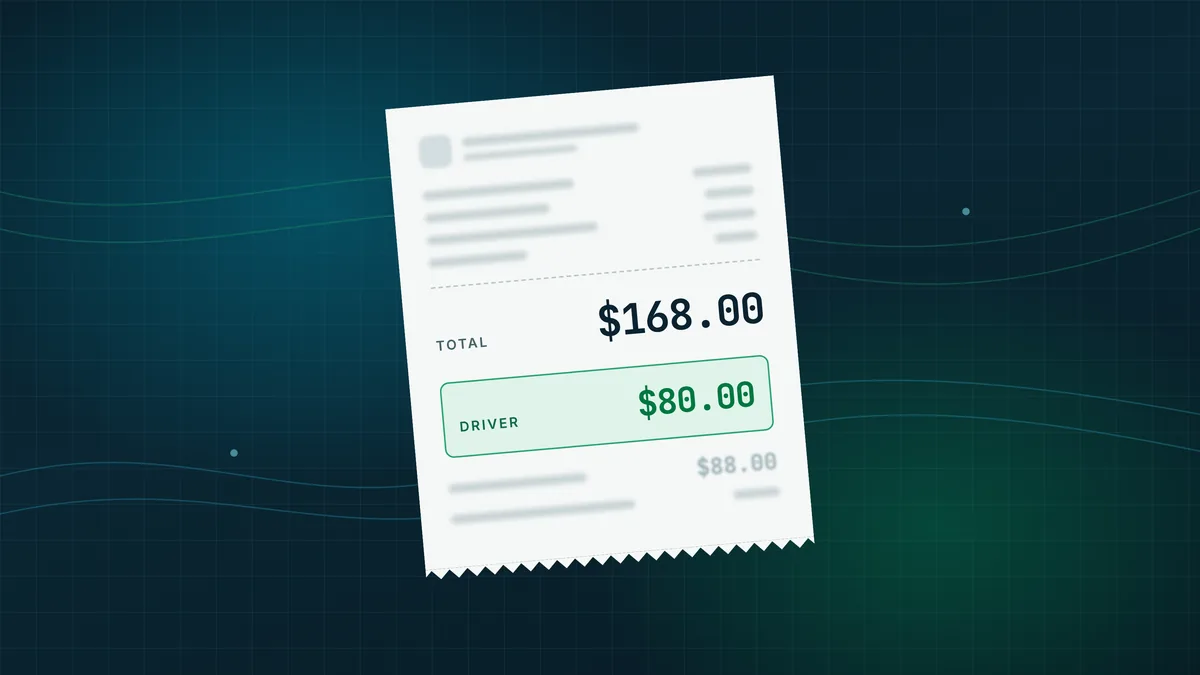
RideClaim.co’s founder previously drove for Uber and recalls one trip in the Chicago area when a passenger asked how much the driver was being paid. The answer was about $80. The passenger said he had paid $168.
That is a firsthand recollection, not an independently audited fare record. And the $88 difference cannot responsibly be described as $88 of profit: insurance, taxes, fees, promotions, and other costs can sit between passenger payment and driver compensation.
But the exchange illustrates a problem that a company’s anti-lawsuit campaign does not solve. The rider and driver can be looking at the same trip and experiencing very different economics. Neither knows from those two numbers alone exactly where the rest went.
Drivers are entitled to question the split. Riders are entitled to question it too.
Lyft has recognized this transparency problem in its own public statements. Its driver earnings materials separate driver earnings, the Lyft fee, and external costs such as insurance and government charges. In a 2026 update, Lyft announced a 30% monthly cap on its own fee, while treating external charges separately. Lyft says its average fee is substantially below the cap.
The qualification is everything. A cap on Lyft’s fee does not mean a driver necessarily takes home 70% of the entire amount a passenger paid. Insurance and other outside charges may be deducted separately; the calculation also operates over a month, not as a guarantee for each individual ride. Lyft’s published numbers are the company’s own representations, not a universal independently verified accounting of every trip.
This is the sort of explanation consumers deserve before they’re invited to blame one profession for rising prices: what is being charged, who controls the charge, what part is actually an insurance cost, and what part is retained by the company?
How often was another driver involved in a fatal accident?
The 2021–2022 U.S. Safety Report covers more than 1.8 billion U.S. trips from January 2021 through December 2022. It was published August 30, 2024. Motor-vehicle figures in it include reports submitted on or before June 30, 2024, and Uber says those figures are reconciled to 2022 Fatality Analysis Reporting System data. In that dataset Uber counted 153 people killed across 127 fatal Uber-related accidents. Table 1 lists 0.87 Uber-related fatalities per 100 million vehicle miles traveled for 2021–2022, next to a national rate of 1.35. Uber described its rate as substantially lower than the national average. That comparison is Uber’s. The report says its fatality data does not consider fault.
Uber also said 62% of Uber rider and driver fatalities in that 2021–2022 set involved third-party risky-driving behavior. The report presents that figure as involvement, not as a court’s assignment of fault. It helps explain why a passenger’s claim may start with a driver outside the rideshare vehicle.
Which insurance can pay if your driver did nothing wrong?
Suppose an uninsured motorist hits your Lyft and both you and your driver get hurt. You can ask about coverage for the accident even if your driver did nothing wrong. Which benefits are available depends on the state, the policy, and what happened.
- Liability insurance generally covers harm the insured is legally responsible for causing.
- Uninsured or underinsured motorist coverage (UM/UIM) can pay eligible people when the at-fault driver has too little insurance or none at all.
- Personal injury protection (PIP) or medical payments coverage can pay certain medical expenses without a finding that the rideshare driver caused the accident. Availability and payment order vary.
- Occupational accident coverage can pay certain benefits to qualifying drivers. It serves a different purpose from passenger coverage.
Check what the driver was doing in the app. Waiting for a request, driving to a pickup, and carrying a rider can bring different policies into play. Personal auto policies may also restrict coverage for paid rides. Several policies may come up in the same accident, and each has its own terms and limits.
What California riders traded for the prospect of lower fares
California offers a way to measure the tradeoff. Uber said the state’s former $1 million uninsured and underinsured motorist requirement was a major contributor to higher rideshare costs. It says that under Senate Bill 371, starting January 1, 2026, Uber passenger trips have UM/UIM coverage of $60,000 per person and $300,000 per accident. Uber also describes $1 million in liability coverage for injury or property damage in accidents caused by the rideshare driver.
Those two amounts apply to different risks. UM/UIM matters when another motorist causes the accident and has too little coverage. The $60,000 per-person minimum can leave less protection for someone with extensive medical bills or permanent injuries than the previous $1 million requirement. What a rider can recover also depends on other available coverage.
A smaller insurance requirement may cost the platform less. The figures that would show the effect on riders are changes in fares and the amount of financial protection available after a serious accident.
But aren’t there frivolous lawsuits?
Bad claims exist, and courts have ways to deal with them. Federal Rule 11 requires a proper basis for filings and allows sanctions for certain violations. Federal Rule 56 allows a court to rule without a trial when there’s no genuine dispute over a fact that matters and the moving party is entitled to judgment under the law. State courts have their own rules.
The outcome of a lawsuit tells you only so much about its merits. A case may end because the plaintiff missed a deadline, had too little evidence, or had no viable claim under the law. A settlement can reflect the cost of continuing a case and the risk of losing. To measure abuse, Uber would need to show how many claims were actually unsupported or fraudulent, what those claims cost, and how its proposed reforms would affect people with valid injuries.
What the McDonald’s coffee case looked like in court
Stella Liebeck was 79 in 1992 when she spilled McDonald’s coffee while she was in the passenger seat and her grandson was driving. The American Museum of Tort Law says she suffered third-degree burns over 16% of her body, spent eight days in the hospital, needed skin grafts, and took two years to recover. Jurors awarded $200,000 in compensatory damages, found her 20% responsible, and reduced that award to $160,000. They also awarded $2.7 million in punitive damages, which the trial judge reduced to $480,000. The later settlement amount was not disclosed. A story told only as a suit over hot coffee leaves out the injuries, the shared fault, and what the judge did to the award.
Where Uber and California trial lawyers found agreement
In 2026, Uber and the Consumer Attorneys of California backed competing California ballot measures. Uber sought to limit attorney fees in medical recoveries for all California accidents. The attorneys’ group wanted greater Uber liability for sexual misconduct. Each side had raised or allocated more than $75 million, CalMatters reported.
Governor Gavin Newsom signed their compromise, Senate Bill 623, on June 25, 2026. It limits recovery for treatment from providers who bill against a future settlement, addresses excessive charges and unnecessary treatment, and adds annual driver background checks and stricter eligibility rules. It applies to ride-hailing accidents and leaves attorney fees uncapped, according to CalMatters. Senator Tom Umberg’s office summarized the law.
California Secretary of State Shirley N. Weber announced the withdrawal of the initiative to limit medical recoveries and attorney fees from the November 3 ballot. CalMatters and Umberg’s office reported that the agreement removed both competing measures.
What a rider paid for
Commercial insurance is part of the cost of selling a ride. Passengers pay the fare, while the company chooses how to arrange coverage and build those costs into the price. When someone is hurt, the insurer investigates and pays claims covered by the policy.
The platform, the insurer, medical providers, and lawyers all have financial interests. For the injured person, the questions are more concrete. Who caused the accident? What loss can they prove? Which policy applies, and what does it owe?
What Uber and Lyft would need to show to settle the argument
To show that litigation drove a fare increase, Uber or Lyft would need to separate claim frequency and severity, fraud and billing disputes, insurance rates, and mileage from driver incentives, platform fees, and demand. To show that a reduction in coverage helped consumers, they’d also need to report what riders saved, whether drivers saw any of the savings, and how much protection was left after a serious accident.
The insurance line on your receipt is one piece of the fare. The rest of the receipt deserves the same attention.
Editorial disclosure: RideClaim.co is not a law firm and does not provide legal advice. RideClaim.co is an independent consumer-information and attorney-referral website. Firms pay RideClaim.co for referrals. That business relationship is disclosed on our About page. This article is reporting and analysis, not individual legal advice. Insurance coverage and legal rights depend on the facts, governing law, and policy language.
Hurt in a rideshare accident?
Read your state’s insurance guide, then request a free case review. There is no cost and no obligation to hire anyone.
Comments
Comments are public. Please don't share private details about your own case here.