How much insurance is available after a Michigan Uber or Lyft accident?
Michigan uses two rideshare liability tiers once a driver is logged into the app, and those tiers sit on top of Michigan’s no-fault PIP system.
While the driver is online and waiting for a request, the required residual liability is at least $50,000 per person / $100,000 per incident for bodily injury and $25,000 for property damage. Once a prearranged ride begins — including the drive to the pickup — residual liability rises to at least $1,000,000. Michigan Compiled Laws § 257.2123(2), (3); § 257.2102(o); § 257.518b.
PIP is not a simple extra pot of rideshare money. A transportation network company may choose $250,000, $500,000, or unlimited PIP medical coverage, Michigan Compiled Laws § 500.3107c(7), but a passenger’s first-party medical benefits can still follow Michigan’s ordinary priority rules, § 500.3114(1), (2)(g). Preserve app status and PIP declarations before treating any layer as automatic.
Those liability limits are not the PIP priority rule. No-fault PIP priority can depend on the injured person’s own insurance.
Michigan combines rideshare liability coverage with its own no-fault PIP system
Michigan uses two main rideshare liability tiers once a driver is logged into the app. A driver who is online and waiting for a request must have at least $50,000 per person / $100,000 per incident in bodily-injury liability and $25,000 in property-damage liability. Once a prearranged ride begins, the required residual liability coverage jumps to a $1 million combined single limit. Michigan also requires personal protection insurance (PIP) and property protection insurance (PPI) during both rideshare periods. Michigan Compiled Laws § 257.2123(2), (3); § 257.518b
| App status at impact | Policy that responds | Coverage required |
|---|---|---|
| Driver offline | Driver’s personal auto policy | The driver’s ordinary personal auto coverage applies, subject to that policy’s limits and Michigan no-fault rules. |
| App on, waiting for a request | TNC-driver or transportation-network-company coverage | At least $50,000 per person / $100,000 per incident bodily injury and $25,000 property damage, plus Michigan-required PIP and PPI, Michigan Compiled Laws § 257.2123(2). |
| Ride accepted / heading to pickup | Primary rideshare coverage | $1,000,000 combined single-limit residual liability, plus required PIP and PPI, Michigan Compiled Laws § 257.2123(3); § 257.2102(o). |
| Passenger in vehicle through ride completion | Primary rideshare coverage | $1,000,000 combined single-limit residual liability, plus required PIP and PPI, Michigan Compiled Laws § 257.2123(3); § 257.2102(o). Which PIP policy pays medical benefits can depend on the injured person’s own insurance status. |
Michigan’s rideshare law allows the required insurance to be maintained by the driver, the transportation network company, or a combination of the two, but it must recognize the vehicle’s rideshare use. Michigan Compiled Laws § 257.2123(4)
The accepted-ride period starts before the passenger gets in
The $1 million liability tier applies while the driver is engaged in a transportation-network-company prearranged ride. A prearranged ride begins when the driver accepts a requested ride through the digital network and ends when the last requesting rider departs from the vehicle, Michigan Compiled Laws § 257.2102(o). That means the drive to pick up an accepted passenger belongs to the higher rideshare tier; it does not fall in the lower waiting-for-a-request period.
Michigan & the Midwest
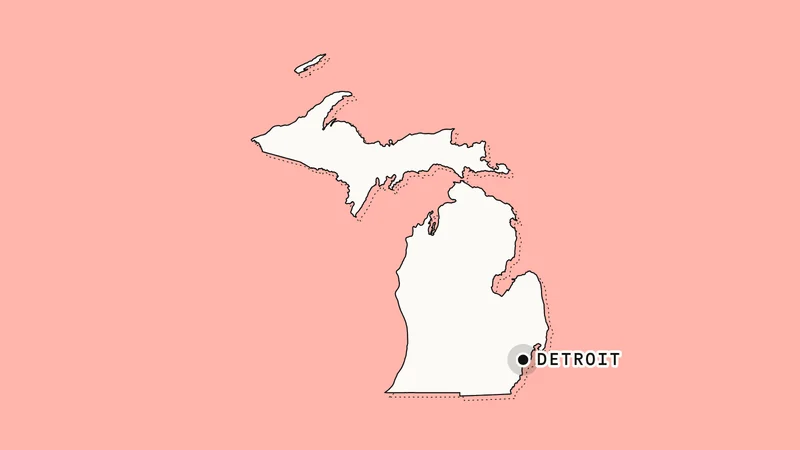
Michigan PIP is not a simple extra pot of rideshare money
Michigan’s Department of Insurance and Financial Services says a transportation network company may choose $250,000, $500,000, or unlimited PIP medical coverage. Michigan Compiled Laws § 500.3107c(1) sets the PIP medical coverage levels at $50,000, $250,000, $500,000, or no limit; a transportation network company, as the applicant or named insured, may select only the $250,000, $500,000, or unlimited options, § 500.3107c(7). But a passenger’s own insurance status matters. A passenger who has an auto policy with PIP generally looks to that policy for PIP benefits, Michigan Compiled Laws § 500.3114(1). A transportation network company vehicle is excepted from the rule that would otherwise send a passenger first to the insurer of a vehicle operated in the business of transporting passengers, § 500.3114(2)(g). A passenger who opted out of PIP or is excluded under Michigan law is not automatically entitled to reimbursement from the TNC’s PIP policy. A passenger who is not required to maintain auto insurance may claim under the TNC policy, subject to the TNC’s selected PIP level, which cannot be less than $250,000 per person per accident. Michigan DIFS Auto Insurance Reform FAQ
If the paying PIP layer has no limit under section 3107c(1)(d), the Michigan Catastrophic Claims Association created by Michigan Compiled Laws § 500.3104 indemnifies member insurers for ultimate personal-protection loss above the statutory retention.
That priority system is one reason the same rideshare accident can produce very different first-party medical-benefit questions for the driver, the passenger, and someone in another vehicle.
Uber and Lyft show the same core Michigan liability tiers, but do not assume UM/UIM exists
Uber
Uber’s Michigan certificate for the March 1, 2026–March 1, 2027 policy period shows $50,000 / $100,000 / $25,000 liability while the driver is online and waiting, and a $1 million combined single limit after a ride is accepted. The certificate lists PIP and PPI as included as described in the policy and states that uninsured/underinsured motorist coverage is not included. Uber Michigan certificate of insurance
Lyft
Lyft’s Michigan certificate for the October 1, 2026–October 1, 2027 policy period shows the same $50,000 / $100,000 / $25,000 waiting-period liability and $1 million accepted-ride liability structure. The certificate in force on the accident date should be obtained before relying on any additional coverage details. Lyft Michigan certificate of insurance
Policy certificates change. The accident date, app status, and actual policy documents control—not a generic national coverage summary.
Preserve the records that show exactly which Michigan coverage period applied
Michigan rideshare claims can depend on both the app timeline and the injured person’s no-fault insurance position. Useful records include:
- Uber or Lyft trip receipt and ride ID
- Pickup, drop-off, and route records
- Screenshots showing whether the ride had been accepted
- Police accident report and witness information
- The driver’s personal auto declarations page
- The TNC certificate and full policy in force on the accident date
- The injured person’s own Michigan auto/PIP declarations
- Medical bills, wage-loss records, and replacement-service documentation. Which policy pays PIP is separate from the residual liability limit. See PIP priority.
Michigan law requires transportation network companies to retain an individual trip record for at least one year, including pickup and drop-off information, trip duration, distance, and the fee charged. Michigan Limousine, Taxicab, and Transportation Network Company Act
Latest from Michigan
In Michigan, the app timestamp and the PIP priority question both matter.
The liability tier can change when a ride is accepted, while medical benefits may depend on a separate no-fault analysis.